Permissive Parenting: When Love Has Few Limits
Published: 12 Sep 2026
Parenting often starts with love, patience, and a strong wish to keep children happy. But sometimes, parents avoid rules because they fear upsetting their child. This can slowly create a permissive parenting style.
Permissive parenting feels warm and caring. Parents may listen to their children, give them freedom, and avoid harsh punishment. These qualities can support a close relationship. However, children also need clear limits, routines, and guidance.
The goal is not to become a strict parent. The goal is to create a home where children feel loved and understand what is expected from them.
What Does Permissive Parenting Mean?
Permissive parenting is a parenting style with lots of warmth but few firm rules. Parents may allow children to make many choices and often avoid saying no.
- Parents may rarely enforce rules.
- Children may get what they ask for.
- Parents often use gentle discipline.
- Limits may change from day to day.
Permissive parents usually care deeply about their children. The problem is not a lack of love. The challenge comes when kindness replaces needed guidance.

How Permissive Parenting Can Start Without You Noticing
Many parents do not choose permissive parenting on purpose. It can develop through small daily choices, especially when parents feel tired, guilty, busy, or worried about conflict.
- You allow one extra cartoon.
- You buy something after your child cries.
- You change a rule to avoid an argument.
- You stop a consequence because your child feels upset.
One small choice does not make someone a permissive parent. Parenting patterns matter more than single moments. Every parent gives in sometimes, and that does not mean you are doing everything wrong.
Signs Your Parenting May Need More Structure
You may notice permissive habits when your child expects fewer limits at home. Your child may argue about simple rules because they have learned that rules can change.
- Your child often decides family rules.
- Bedtime becomes a daily debate.
- Your child struggles to accept “no.”
- You feel nervous about setting limits.
- Consequences rarely happen after broken rules.
These signs do not mean you are a bad parent. They simply show that your family may need clearer expectations. Small changes can create better routines without removing warmth.
When Saying Yes Becomes Too Easy
Saying yes can feel peaceful in the moment. It may stop crying, arguing, or complaining. But repeated yeses can teach children that pushing harder may change your answer.
- Your child asks again after you say no.
- You change your answer after crying starts.
- You avoid rules during busy days.
- You give rewards to stop difficult behavior.
A calm “no” can teach an important lesson. Children learn that disappointment is normal and that parents can stay kind while keeping a clear boundary.
The Good Side of a Warm Parenting Style
Permissive parenting often includes positive qualities such as affection, open communication, and emotional support. These strengths can help children feel safe when parents also provide healthy structure.
- Children may feel comfortable sharing feelings.
- Parents may listen without judging.
- Family communication can feel open.
- Children may enjoy freedom and creativity.
The answer is not to remove these strengths. Parents can keep warmth, listening, and affection while adding simple rules that help children understand limits.
Where Too Much Freedom Can Cause Problems
Children need freedom, but they also need guidance. Too much freedom can make everyday tasks harder when children have not learned how to follow limits or manage frustration.
- Rules may feel optional.
- Children may struggle with waiting.
- Self-control can take longer to develop.
- Daily routines may become stressful.
A child does not learn self-discipline overnight. Parents can teach it through repeated routines, clear expectations, and calm follow-through.

Why Loving Parents Sometimes Avoid Limits
Permissive parenting can come from good intentions. A parent may want to protect a child’s feelings, make up for lost family time, or avoid repeating harsh parenting from their own childhood.
- Some parents fear becoming too strict.
- Some feel guilty after a busy day.
- Some dislike seeing their child upset.
- Some want a friendship with their child.
These feelings are understandable. Parents do not need to become cold or harsh. They can stay loving while accepting that children need adults to guide important decisions.
Love and Rules Can Work Together
Children need emotional safety and clear limits at the same time. A warm parent can say no, enforce a bedtime, and still give hugs, attention, and reassurance.
- Listen before responding.
- Keep rules simple.
- Explain the reason briefly.
- Stay calm during resistance.
- Offer comfort after setting the limit.
A healthy boundary does not damage a close parent-child relationship. It can make children feel safer because they know what to expect from the adults around them.
Simple Ways to Add More Structure at Home
You do not need a complete parenting change overnight. Start with one area that causes stress, such as bedtime, screen time, homework, or chores.
- Pick two or three important rules.
- Tell your child what the rule means.
- Use the same rule each day.
- Give reminders before transitions.
- Follow through calmly.
Small changes often feel easier for both parents and children. When expectations stay steady, children have fewer reasons to test whether the rule will change.
How to Say No Without Feeling Like the Bad Parent
Many parents feel guilty when they say no. But saying no can protect a child’s routine, safety, health, and ability to handle disappointment.
- Use a calm voice.
- Keep your answer short.
- Do not argue for a long time.
- Show empathy for the child’s feelings.
- Keep the boundary in place.
Try saying, “I know you want more screen time. Screen time is finished for today.” You can show understanding without changing the decision.

Use Consequences That Teach Instead of Scare
A consequence should help children understand actions and results. It should not humiliate, frighten, or hurt them. Natural and related consequences can make lessons easier to understand.
- A toy gets put away when play becomes unsafe.
- Screen time ends when the agreed time finishes.
- A child helps clean a small mess they made.
- A missed routine may reduce time for another activity.
Parents should choose consequences that match the situation. The purpose is teaching, not revenge. Calm consequences also help parents avoid emotional reactions.
Build Routines That Make Rules Easier
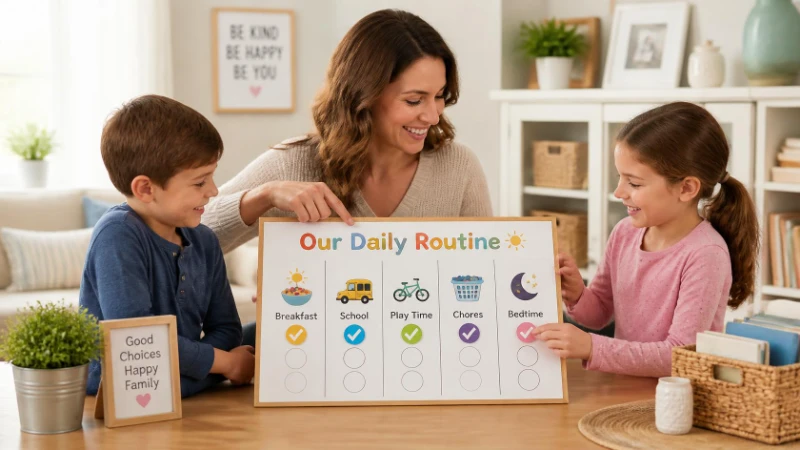
Children often behave better when they know what comes next. A simple routine removes many daily arguments because the child can predict the next activity.
- Wake up and get dressed.
- Eat breakfast.
- Complete school tasks.
- Have play or screen time.
- Prepare for bedtime.
You can create a simple picture chart for younger children. Older children can use a written checklist. Keep the routine realistic and easy to follow.

What Healthy Boundaries Look Like in Real Life
Healthy boundaries tell children what they can expect. They are clear, respectful, and consistent. They do not require yelling, threats, or long lectures.
- “You can choose the blue shirt or the green shirt.”
- “You can play after your homework.”
- “The tablet goes away at bedtime.”
- “You may feel angry, but you cannot hit.”
Notice the difference between control and guidance. A parent can respect a child’s feelings while still protecting an important family rule.
Parenting Young Children: Ages 2–4
Toddlers and preschoolers need simple rules and repeated reminders. They are still learning self-control, so parents should keep expectations realistic and use short instructions.
- Use one instruction at a time.
- Give two simple choices.
- Repeat important rules calmly.
- Keep routines predictable.
- Praise helpful behavior.
For example, instead of saying, “Stop making a mess and behave properly,” say, “Blocks stay on the floor.” Simple words help young children understand what you expect.
Parenting School-Age Children: Ages 5–12
School-age children can understand more detailed rules. They can also take part in family routines, chores, and simple decisions that help them develop responsibility.
- Create clear house rules.
- Give age-appropriate chores.
- Let children solve small problems.
- Use related consequences.
- Praise effort and responsibility.
Children in this age group often want more independence. Give them choices within safe limits. This helps them practice decision-making without removing parental guidance.
Parenting Teenagers: Ages 13–18
Teenagers need more independence, but they still need boundaries. Parents can shift from controlling every choice to discussing expectations, safety, responsibility, and trust.
- Set clear safety rules.
- Discuss expectations together.
- Give reasonable freedom.
- Keep important limits firm.
- Allow natural results when safe.
Teenagers may challenge rules more openly. Stay calm and listen to their point of view. Listening does not mean you must agree with every request.

Try the Two-Choice Approach
Children often resist when they feel they have no control. Giving two safe choices can reduce arguments while keeping the parent in charge of the important boundary.
- “Do you want to brush teeth before or after your pajamas?”
- “Do you want to clean blocks or books first?”
- “Do you want to wear the blue shirt or the white shirt?”
- “Do you want to walk to the car or hold my hand?”
The choices should not change the main rule. Your child gets control over a small detail, while you keep the larger boundary clear.
Give Warnings Before Big Changes
Sudden changes can lead to resistance, especially with young children. A short warning gives the child time to finish an activity and prepare for the next one.
- Give a five-minute warning.
- Give another reminder near the end.
- Explain what happens next.
- Follow the routine when time ends.
For example, say, “Five more minutes of play. Then we will clean up for dinner.” This simple habit can make transitions smoother and reduce daily battles.
Stay Calm When Your Child Gets Upset
Children can cry, shout, or complain when parents set new limits. Your calm response teaches them that strong feelings are manageable and do not control every family decision.
- Lower your voice.
- Use fewer words.
- Name the feeling.
- Repeat the boundary.
- Give space when needed.
You can say, “You are angry because playtime ended. I understand. Playtime is still finished.” This response respects the feeling without removing the limit.
What If You Already Use Permissive Parenting?
You do not need to feel ashamed if you recognize these habits in your home. Parenting changes as children grow, and every family has days when routines become difficult.
- Choose one rule to improve first.
- Tell your child about the new expectation.
- Keep the rule simple.
- Expect some resistance.
- Stay consistent.
Your child may test the new boundary at first. This does not mean the approach has failed. Give the new routine time and keep your response calm.
Avoid Moving From Permissive to Too Strict
The answer to permissive parenting is not harsh parenting. Children need limits, but they also need respect, affection, and room to make age-appropriate choices.
- Do not use fear to gain obedience.
- Do not shame your child.
- Do not create dozens of rules.
- Do not punish every mistake.
- Do give clear guidance.
Think about balance. Your child should know that you are the adult, but also know that your home is a safe place to make mistakes, ask questions, and learn.
A Simple Daily Plan for More Balanced Parenting
You can start with a few predictable habits instead of changing everything at once. Simple routines can make family life easier and give children clear expectations.
Morning:
Set a simple routine for dressing, breakfast, and school preparation.
Afternoon:
Give children time for food, rest, play, homework, and chores.
Evening:
Set clear limits around screens, dinner, bath time, and bedtime.
Every day:
Notice good behavior. Give attention when your child follows a rule, helps someone, or handles disappointment well.
Questions Parents Often Ask About Permissive Parenting
Is permissive parenting bad?
Permissive parenting is not about being a bad parent. It describes a pattern with high warmth and few limits. Children still need guidance, routines, and age-appropriate boundaries.
Can a permissive parent become more firm?
Yes. Start with a few important rules and follow them consistently. You can become more structured without becoming harsh or distant.
Does saying no hurt a child’s feelings?
A child may feel disappointed when you say no. That feeling is normal. A calm and loving parent can allow disappointment while keeping a needed boundary.
How do I stop giving in to tantrums?
Stay calm and keep your response short. Name the feeling, repeat the boundary, and avoid changing your answer simply because your child becomes upset.
Can I be a gentle parent without being permissive?
Yes. Gentle parenting can include empathy, respect, and calm discipline. Healthy gentle parenting also gives children clear limits and age-appropriate expectations.
Final Thoughts
Permissive parenting often grows from love. Parents want happy children, peaceful homes, and close relationships. These goals matter, but children also need adults who can provide steady guidance.
You do not have to choose between being loving and being firm. You can listen to your child, respect their feelings, give choices, and still say no when a limit matters.
Start small. Choose one daily struggle and create one clear rule. Stay calm. Follow through. Give your child time to learn.
Good parenting is not about being perfect. It is about helping children feel loved while teaching them how to handle limits, choices, responsibility, and big feelings.
The goal is simple: warm connection, clear boundaries, and a safe place for your child to grow.






- Be Respectful
- Stay Relevant
- Stay Positive
- True Feedback
- Encourage Discussion
- Avoid Spamming
- No Fake News
- Don't Copy-Paste
- No Personal Attacks
- Be Respectful
- Stay Relevant
- Stay Positive
- True Feedback
- Encourage Discussion
- Avoid Spamming
- No Fake News
- Don't Copy-Paste
- No Personal Attacks
